
CALIBRATION AND REPAIR

Service doesn’t end with your purchase—we’re experts in calibration and repair.

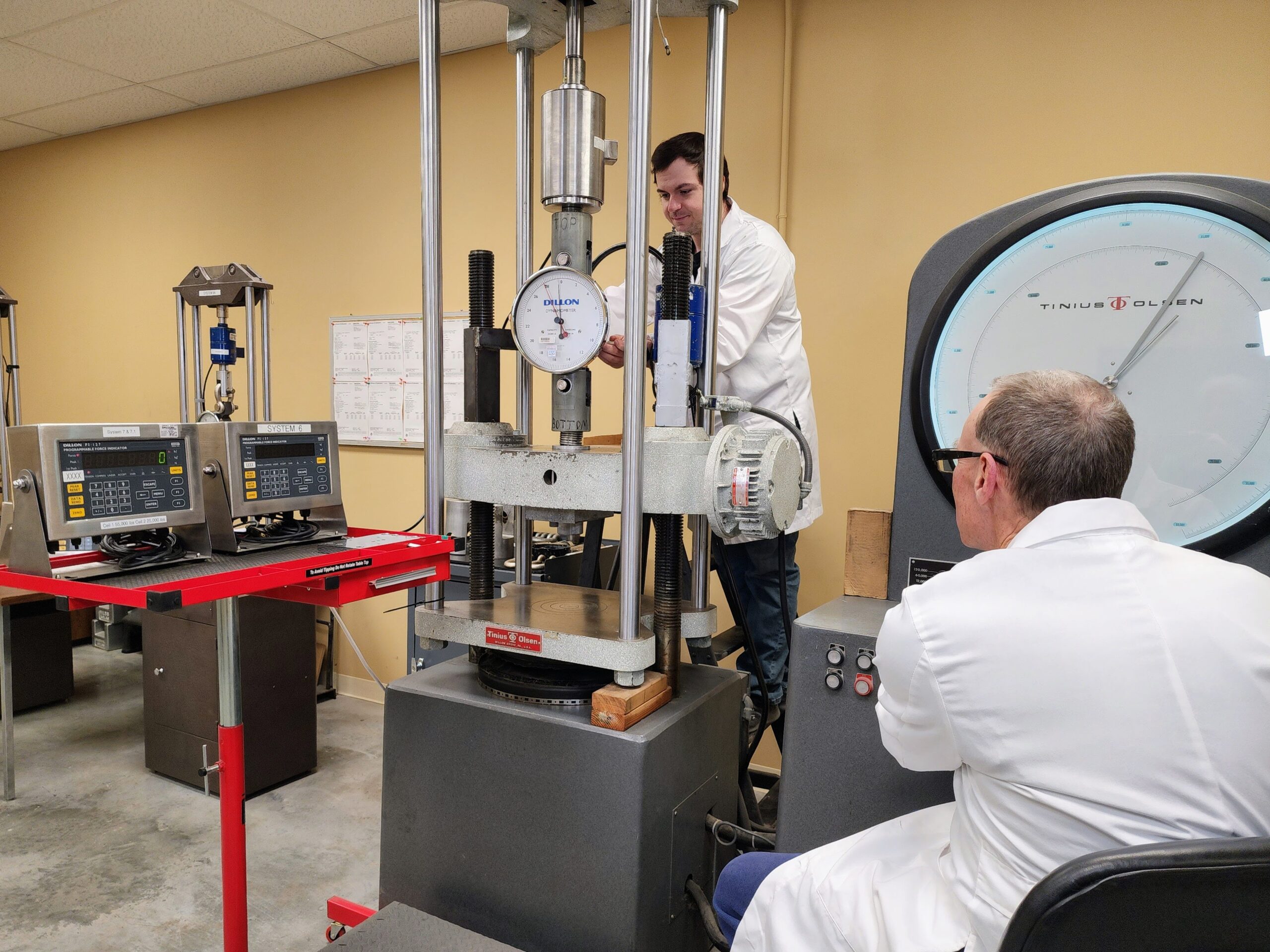
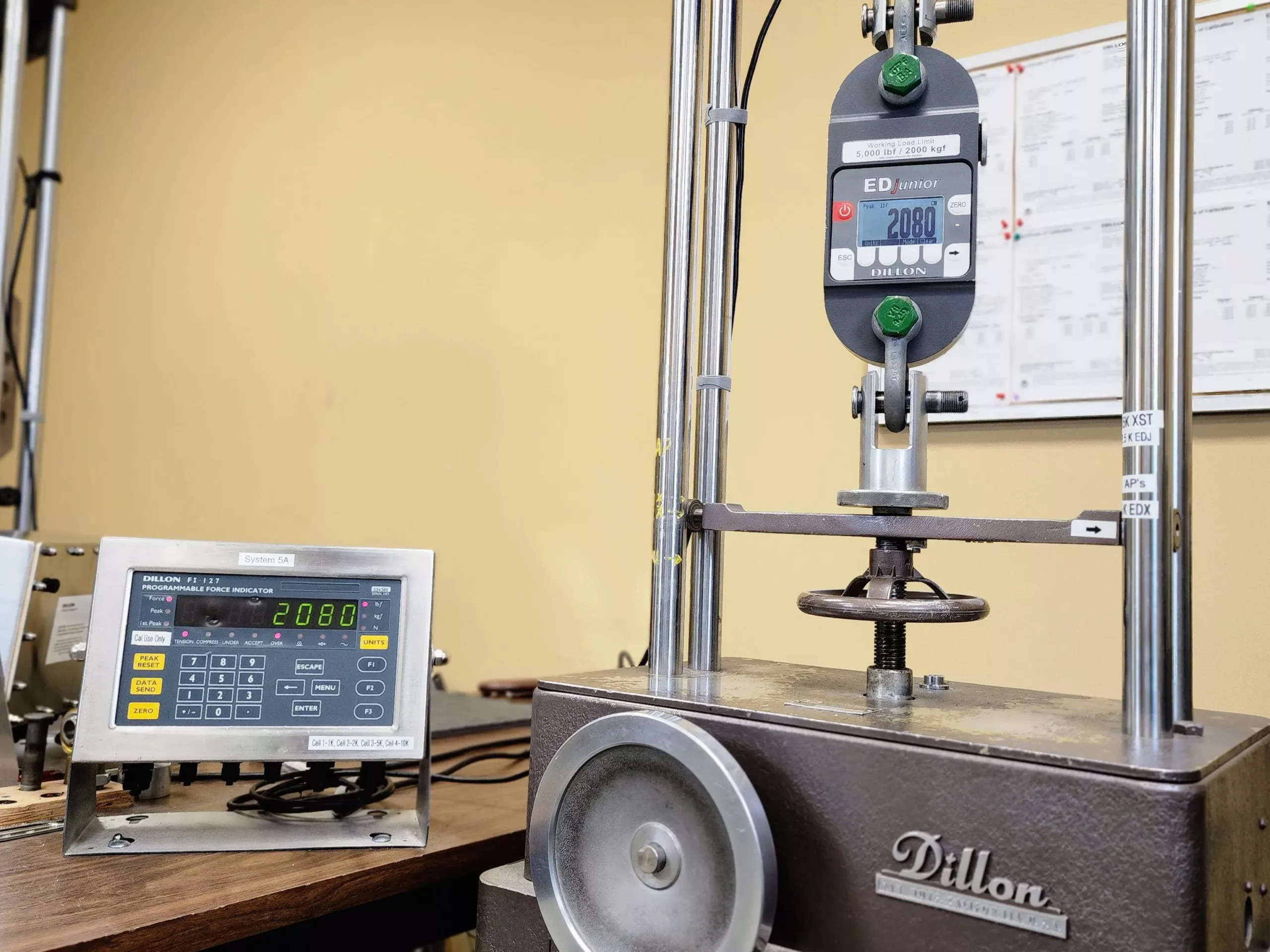
Correctly calibrating a tension dynamometer is critical to ensuring correct readings. At Dillon/Quality Plus, we offer quick, accurate and comprehensive calibration and repair services for all types of dynamometers to ensure your business doesn’t have to miss a beat.
How often should dynamometers be calibrated?

We recommend that any Dillon dynamometer be recalibrated annually to maintain high standards of accuracy. The more often you use the unit, the more frequently you should get it recalibrated. For our digital dynamometers, you’ll get an automatic pop-up notification on the display when it’s time to send it in for calibration.

Precision Calibration You Can Trust

Our calibration services have fast turnaround times and are traceable to NIST standards. With every Dillon/Quality Plus purchase, you get a 2-year warranty, a 1-year recall sticker and automatic notification of calibration due dates (plus, every new unit is calibrated at no additional cost). We maintain extremely high standards of service, and all of our testing equipment is recertified by the manufacturer at least once a year.
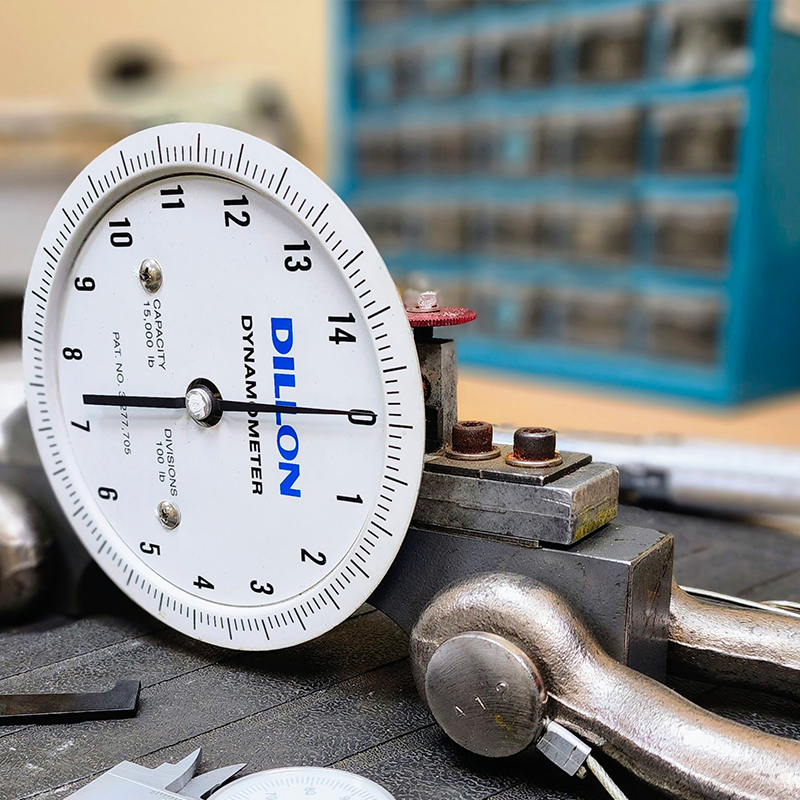
Dillon Dynamometer calibration and repair

Our dynamometer calibration process

1. Initial Inspection & Assessment

Once we receive the dynamometer, one of our experienced technicians will visually inspect it. If they see any problems (for example, a bent pointer on a mechanical unit), they’ll fix it or send you a quote for part replacement.

2. Precision Calibration Setup

If the unit passes the visual inspection, the technician installs it in one of our calibration machines, and loads it up at five points over the range of the unit.

3. Testing, Adjustment & Verification

We run 3 tests, and average the three sets of readings. If the result is out of tolerance range, our technicians take apart the unit, make any necessary adjustments, put it back together, and re-test until the average readings are within tolerance.

4. Final Cleaning & Quality Check

Before we ship it back to the customer, each dynamometer goes through a thorough cleaning and final inspection.

Comprehensive dynamometer repair services

Our experienced team of technicians has deep expertise in end-to-end dynamometer repair, including:

  • Keypad replacement for digital dynamometers
  • LCD display repair or replacement for digital dynamometers
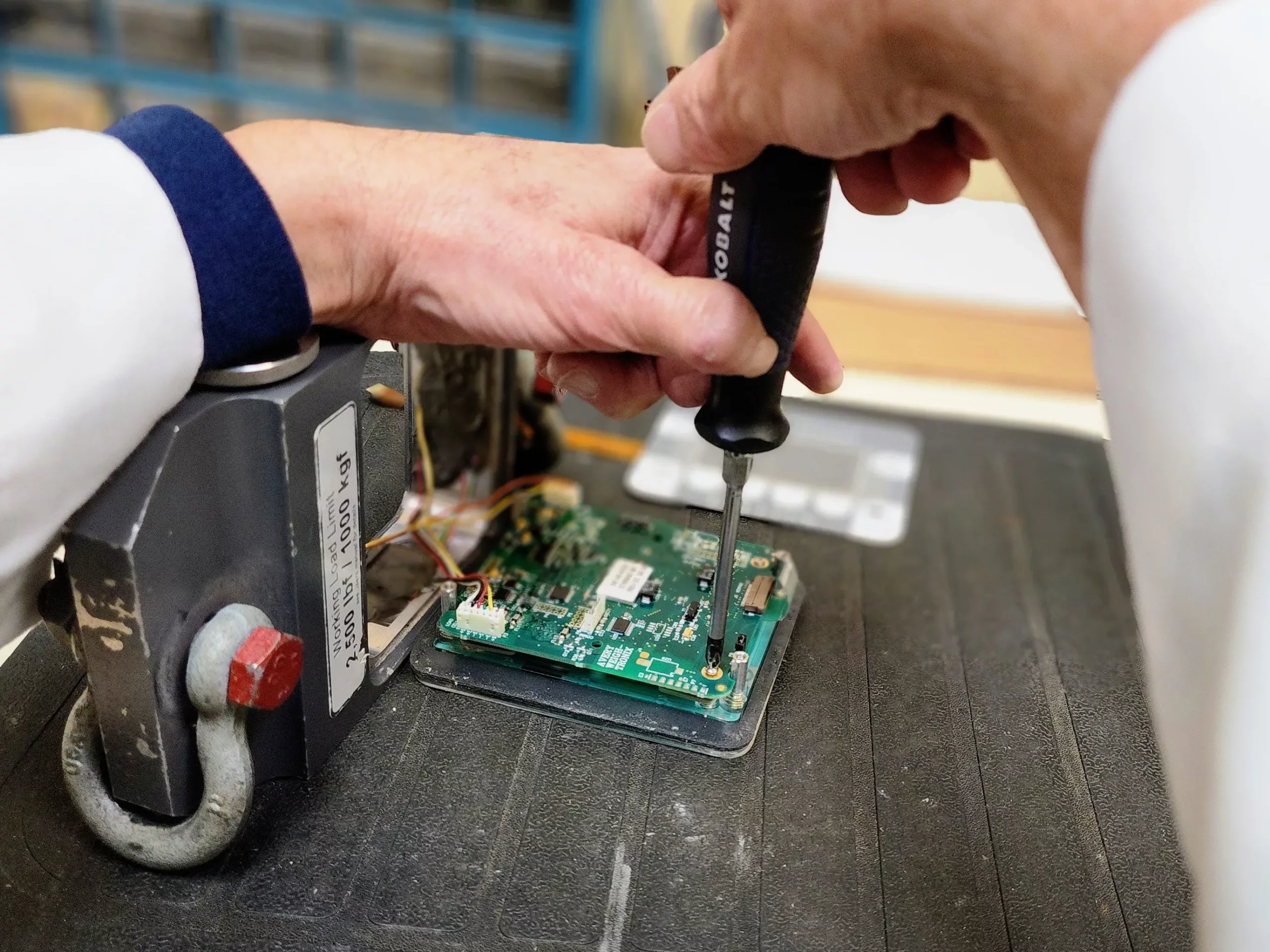
  • Circuit board repair, replacement, or reprogramming for digital dynamometers
  • Software update for digital dynamometers
  • Upgrade from the “Non Radio” to the “Radio Ready” EDXtreme
  • Part replacement and repair for mechanical dynamometers (natural wear and tear can cause breakdown of the moving parts or gauge movement, and affect the calibration and accuracy of the unit)

We pride ourselves on our fast turnaround times for repair. However, we also offer phone support if you can’t send your unit in. All our repair services come with a 30-day parts and workmanship warranty.

Submit a Returned Material Authorization (RMA) form

Fill out this form for repairs and warranty issues, and we’ll get back to you as soon as we can.

Frequently Asked Questions

Have questions about specifications, compatibility, or calibration requirements? Our team is ready to help. Contact us today.

Overloading or shock loading can affect both the accuracy and structural integrity of the dynamometer, even if there is no visible damage. In some cases, the unit may continue to function but produce unreliable readings. Because of this, it is recommended to have the dynamometer evaluated and recalibrated after any suspected overload event. Catching these issues early helps prevent unsafe conditions and ensures the unit is still performing within tolerance.

Accuracy can be affected by overload events, shock loading, and normal wear on internal components. Environmental exposure such as moisture, dirt, or extreme temperatures can also contribute to drift. Even under normal use, all force measurement equipment will gradually shift over time. Regular calibration helps identify and correct these changes before they impact performance.

Inconsistent readings are usually a sign that something is no longer performing as it should. This could be due to internal wear, electronic issues, or the unit being out of calibration. It is best to stop using the dynamometer until it can be evaluated, especially in applications where accuracy is critical. Continuing to rely on unreliable measurements can create safety and operational risks.

Yes, in some cases repair may not be practical. Severe physical damage, extensive internal wear, or unavailable parts can make repair less viable. An evaluation is typically needed to determine whether the unit can be restored to proper working condition. If repair is not the best option, you can make a more informed decision about replacement based on that assessment.

Using a dynamometer that has not been calibrated or checked can lead to inaccurate load measurements. This can impact safety, especially in lifting or tensioning applications, and may also affect product quality or compliance requirements. Small accuracy issues can go unnoticed until they become larger problems. Staying on top of service helps ensure reliable and consistent performance.

Let’s Talk

Ready to get started? Our experienced team is happy to answer calibration and repair questions, or help with anything you need.

Service:

Name(Required)