
Dynamometer Calibration: How Often, What It Costs, and What NIST-Traceable Actually Means

Table of Contents
A Guide to Dynamometer Calibration
Correctly calibrating precision force measurement devices like dynamometers is crucial to getting accurate readings. Here’s what you need to know about how often to calibrate, what it costs, and what “NIST-traceable” actually means when it shows up on a certificate.
How Often Should You Calibrate a Dynamometer?
The standard recommendation is once every 12 months for any dynamometer, whether it’s mechanical or digital. That’s the baseline built into most manufacturer approvals and the interval you’ll see listed on Dillon and Crosby Straightpoint spec sheets across the board.
Annual is a floor, not a ceiling. A few things push that interval shorter:
- Frequency of use. A dynamometer running daily lifts on a job site sees more wear and more chances to drift out of tolerance than one used a few times a month. Heavier use means more frequent checks.
- Environment. Units exposed to temperature swings, moisture, dust, or rough handling in the field are more likely to need recalibration sooner than one stored and used in controlled conditions.
- Evidence of a problem. A dropped unit, a hard shock load, or a reading that looks off compared to a known reference are all reasons to send it in immediately, regardless of when the last calibration happened.
If you’re using a digital dynamometer, you don’t have to track this manually. Most digital models display an automatic pop-up notification when the unit is due for recalibration, so the reminder is built into the tool itself.
What Does Dynamometer Calibration Actually Involve?
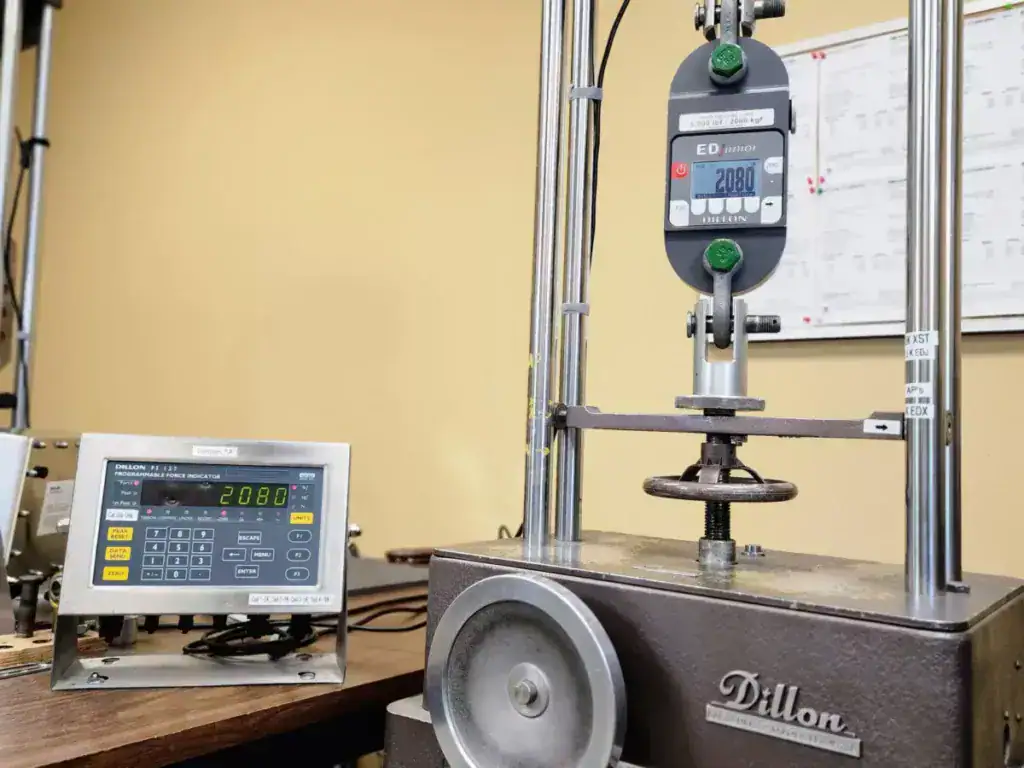
Once a unit comes in for calibration, it goes through a few steps:
- Visual inspection. A technician checks the unit for physical issues first. On a mechanical dynamometer, that might mean a bent pointer or worn linkage. Anything that needs a part replaced gets flagged and quoted before calibration continues.
- Load testing at five points. The unit is installed in a calibration machine and loaded across five points spanning its full range.
- Three test runs, averaged. Results from three separate tests are averaged together. If the average falls outside tolerance, the technician opens the unit, makes adjustments, and retests until it’s within spec.
- Final cleaning and inspection. Before the unit ships back, it goes through a thorough cleaning and final check.
What Does Dynamometer Calibration Cost?
Calibration cost depends on a few factors:
- Capacity and complexity of the unit. A 500 lb mechanical dynamometer and a 550,000 lb digital wireless unit aren’t calibrated the same way, and they don’t cost the same to test.
- Condition of the unit. If it passes visual inspection and comes in within tolerance, you’re paying for calibration only. If the unit needs adjustment, it is included in the calibration cost. Parts replacement adds to the cost.
- Turnaround time. Standard service typically costs less than an expedited or rush turnaround.
- Volume. Businesses sending in multiple units on a recurring schedule are a different conversation than a single one-off unit.
The most reliable way to get an actual number is to request a calibration quote for your specific unit, so you’re pricing what you actually own instead of a general estimate.
What “NIST-Traceable” Actually Means
You’ll see “NIST-traceable” on calibration certificates, and it’s worth understanding what that phrase is promising.
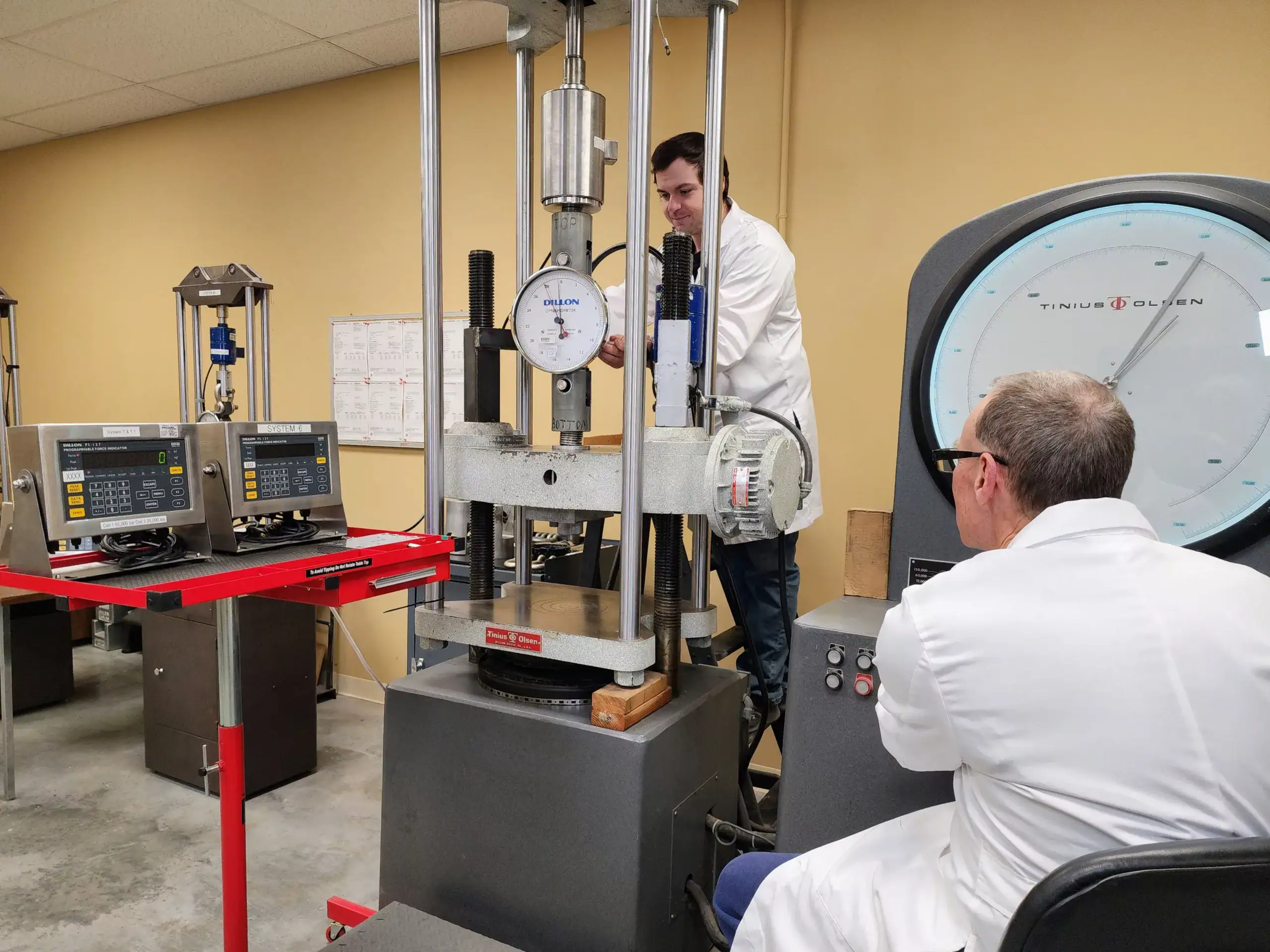
NIST is the National Institute of Standards and Technology, the U.S. government body that maintains the physical measurement standards everything else gets compared against. A calibration is NIST-traceable when there’s an unbroken chain of comparisons connecting the reference used to calibrate your dynamometer back to those national standards, with each link in the chain documented.
In practice, that means the weights or reference equipment used to test your dynamometer have themselves been calibrated against a standard that’s been calibrated against another standard, all the way back to NIST.
A few reasons this matters:
- It confirms accuracy, not just activity. A certificate that says “calibrated” without traceability tells you the unit was checked against something, but not what, or how accurate that something was.
- It supports compliance. Many industries and internal quality systems require NIST-traceable calibration records, particularly where dynamometers are used for safety-critical lifting, rigging, or load testing under standards like ASME B30.26.
- It matters in an audit or after an incident. If a load measurement is ever questioned by an auditor, an insurer, or after an incident, a NIST-traceable certificate documents that the reading was accurate at the time it was taken.

The Bottom Line
Calibrate your dynamometer at least once a year, sooner if it’s used heavily, exposed to harsh conditions, or shows any sign of a problem. Expect a full calibration process with multi-point load testing and averaged results, not a quick check. Costs vary by capacity and condition, so get a quote for your specific unit rather than relying on a general estimate. And when you see “NIST-traceable” on a certificate, it means the reading is backed by a documented, unbroken chain back to national measurement standards.
If it’s time to get your dynamometer calibrated, request a calibration quote or reach out to our service team directly.
-
 Dynamometer Calibration: How Often, What It Costs, and What NIST-Traceable Actually MeansDynamometer Calibration: How Often, What It Costs, and What NIST-Traceable Actually MeansLearn about dynamometer calibration, including how often it is needed, what it costs, and what NIST-traceable calibration means.October 12, 2026
